Thursday, June 7, 2012

10 ways to turn off a homebuyer (conclusion)

9. Poor curb appeal

Much is made of curb appeal, and for good reason: It's your home's handshake, the critical first impression that lasts with most buyers.You have to totally trim and edge your yard to get it into the most immaculate condition you can. It's a big mistake to not freshly mulch the beds and trim the trees. Every little detail counts.
To not power-wash the exterior or leave mud dauber and wasp and bird's nests in your eaves and above your doors? You've got to be a fool to do that.
Whether inside or out, less is more when it comes to clutter.

10. Clutter

Whether inside or out, less is more when it comes to clutter.Sellers should start in the closets."Your closets should be half-full with nothing on the floor. Why? Because most people looking for a house have outgrown their previous house. Showing them that you've still got room to grow gives them a reason to buy.
Kitchens and built-in bookshelves should showcase spaciousness by following the rule of three. For kitchens, there should be no more than three countertop appliances. Meanwhile, bookshelves should be divided into thirds: one-third books, one-third vases and pictures, and one-third empty.
The home office should be very generic so any type of professional can imagine living there.
Otherwise, it can be a distraction: 'What does he do for a living? How much money does he make?'
A tip for toddler parents is to pack away extraneous "kiddie litter" and keep a laundry basket handy.
When you get that phone call one hour before a showing, toss everything in that basket and take it to the car with you and your kids, and you're all set.

Wednesday, June 6, 2012

10 ways to turn off a homebuyer (cont.)

6. Too many personal items

Psychologically, when buyers tour a home, they're trying it on to see how it fits, just as they would a  skirt or a pair of pants. If your house is cluttered with too many personal items, it's like the buyer is trying on those clothes with you still in them. A fit is unlikely.Anything that makes your house scream 'you' is what you don't want. Sellers should know that how to decorate to live and how to decorate to sell are different, and right now, they're decorating to sell.
They should try to eliminate personal items, including family photos, personal effects and even unique colors.
As soon as you have family photos, buyers get very distracted. 'Oh, did I go to school with him? What do their children look like?' they may say. Suddenly, you're selling your family, and you're not selling the home.
If you really want to hook a buyer, try to place a mirror strategically so that people can actually see themselves in the home, so they can actually picture themselves living there.

7. Snoopy sellers

Realtors and buyers alike generally bristle when the seller greets them at the door for a showing.It's so annoying. They will want to walk around with the potential buyer and put in their two cents' worth. It's not good. Normally, there are one out of 10 sellers where it's OK to have them there, and that's because they know what is up with the property and how everything works.
Goldwasser makes a point to shoo his sellers away from showings when he's the listing agent.
They like to think they know what they're doing, and that's fine. But when you've sold thousands of homes and you have a system, you know how to get people the maximum value for their home. That's why they hire you, right?

8. Misrepresenting your home

Misrepresenting your house online in the multiple listing service is a sure way to really upset buyers and their Realtors.One of Cannon's buyers loved a home she saw online. When he drove by to take a look, he was surprised to find acres of ramshackle mobile homes across the street.
advertisement
Sellers are going to paint the best picture they can. Some listings I've looked at and wondered how in the world they got that gorgeous photo without showing all the junk that's around it. When you get there, you wonder why didn't they just be upfront?

Tuesday, June 5, 2012

10 ways to turn off a homebuyer (cont.)

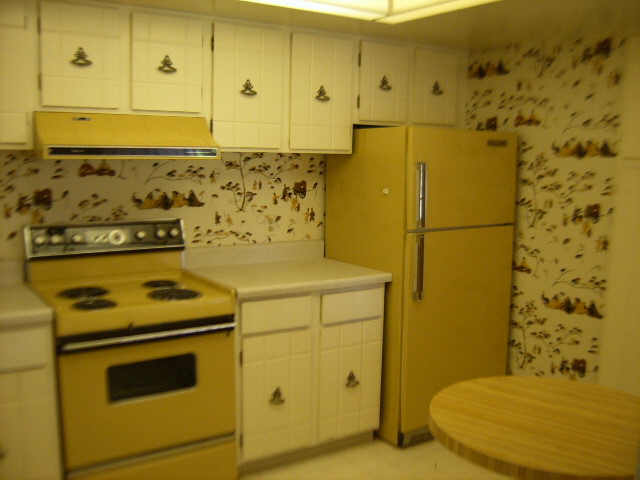
3. Old fixtures

Want buyers to roll their eyes? Leave old fixtures on your doors and cabinets.
You need to change out old fixtures in your house. New cabinet hardware and doorknobs will probably cost all of $400 or $500, but it makes a huge difference.
The same holds true for dated ceiling fans, light fixtures and kitchen appliances.
Homes that have old fans, lights, ovens, microwaves, ranges and dishwashers can really turn a buyer off. Sellers will say, 'Oh, the buyers can take care of that.' Well, yes they can, but it's going to impede you from getting the highest price possible for your home.

4. Wallpaper

Your grandmother may have had it in every bedroom. Your mom may have loved it as a room accent. But today's buyer wants no part of wallpaper. Wallpaper is a definite no-no.Wallpaper is a pain to remove and simply adds another chore to a buyer's to-do list. It is extremely personalized. You've spent hours looking over books to pick out the wallpaper you want. What are the odds that the person walking in the door will also like that wallpaper that you picked out?

5. Popcorn acoustic ceilings

Times change, and with them home decor styles. Acoustic popcorn ceilings, once the must-have for fashionable homes in the '60s and '70s, now badly date your space.If you can't stomach the cost or the mess to remove the overhead popcorn, be prepared to credit a buyer in certain markets in order to close a sale. The popcorn acoustic ceiling is a major, major turnoff to buyers these days.

Monday, June 4, 2012

10 ways to turn off a homebuyer

What's a smart seller to do in this environment?
What a difference a couple of years makes.
Back in 2007, homebuyers would beg to purchase your house. They would even bid more than the asking price for the privilege to do so.
Today ... well, not so much. Once the real estate bubble burst and foreclosures poisoned the housing pool, buyers suddenly regained the upper hand. But instead of buying, they're waiting, convinced that housing prices will continue to drop.

10 home sales killers:
  1. Dirt
  2. Odors
  3. Old fixtures
  4. Wallpaper
  5. Popcorn acoustic ceilings
  6. Too many personal items
  7. Snoopy sellers
  8. Misrepresenting your home
  9. Poor curb appeal
  10. Clutter
What's a smart seller to do in this environment?
There are 10 buyer turnoffs that sellers should avoid at all costs. If you do all the staging correctly and have a good agent, the house will hopefully only be on the market a few weeks. Then you can go back to living your life.

1. Dirt

Hands down, our panel agrees: Nothing turns off a buyer quicker than a dirty house.The No. 1 biggest mistake is not getting the home in the best possible condition. That's huge. Sellers at this point need to be aware of how important it is to get their home in the absolute best condition that they've ever had it in.
Sellers should go the extra mile, from steam-cleaning tile and grout to replacing carpets.
If the carpets are old and smelly, you should put in new. If they're relatively new, you should at least have them shampooed.
Grime can derail any showing. The home should be neat and clean and free of all debris. If it reeks of cats or the kitchen sinks and counters are so filthy that it almost looks like the food is moving, some buy won't even want to come in.

2. Odors

Buyers, it's said, buy with their noses. Make sure your home smells fresh and inviting.Odors are a big one, especially kitchen odors. Sellers should not to cook fried food, fish or greasy food while the house is on the market.
Some pet owners mistakenly believe pet smells to which they've become accustomed help make their abode homey. Nothing could be further from the truth.
If you're a dog person, you tend to think everyone else is a dog person. But the truth is, 50 percent of the population hates dogs and doesn't want to be near them. Pets in the home? You have to deal with that.

Sunday, June 3, 2012

12 Bankruptcy Myths (conclusion)


It's really not hard to file for bankruptcy
6. It's really hard to file for bankruptcy. It's really not. You don't even technically need an attorney -- you can do the paperwork without one. However, it's not recommended to go through the procedure without one.
7. Only deadbeats file for bankruptcy. Most people file for bankruptcy after a life-changing experience, such as a divorce, the loss of a job or a serious illness. They've struggled to pay their bills for months and just keep falling further behind.
8. I don't want to include certain creditors in my filing because it's important to me to pay them back someday and if the debt is discharged, I can't ever repay them. Bless you for even thinking about such a thing. You're no longer obligated to repay them, but you always have that opportunity. If your conscience won't let you sleep nights because you didn't pay your debts, there's nothing in the bankruptcy code that prevents you from doing that once you're back on your feet. But it is nearly impossible to leave any account with a balance out of your list of creditors. In general, all creditors receive notification of your bankruptcy filing, whether they are listed in the petition or not.
9. Filing for bankruptcy will improve my credit rating because all those debts will be gone. Filing for bankruptcy is the worst 'negative' you can have on your credit report. Unlike other negatives, which stay on your report for seven years, bankruptcy can be there for 10 years, but you do get to rebuild your credit eventually.
10. You can't get rid of back taxes through bankruptcy. Generally speaking, this is true. However, there is such a thing as tax bankruptcy.
11. You can only file for bankruptcy once. The truth is, you can only file for Chapter 7 bankruptcy once every eight years. For Chapter 13 reorganization, you can file more often than that.
Of course, that doesn't make it a good idea.
Multiple bankruptcies are really bad. Many people get into the habit of once they've done it, it becomes a way of life. This is not good for your karma. Or your credit rating.
12. I can max out all my credit cards, file for bankruptcy, and never pay for the things I bought. That's called fraud and bankruptcy judges can get really cranky about it.

Saturday, June 2, 2012

12 Bankruptcy Myths


Like most big, bad scary things, bankruptcy has a reputation based on a few tidbits of truth and lots of embellishment. And like most creepy crawlies, it's not nearly as frightening once you know the truth.
With a mind toward declawing the monster, here are a dozen misconceptions about bankruptcy:
1. Everyone will know I've filed for bankruptcy. Unless you're a prominent person or a major corporation and the filing is picked up by the media, the chances are very good that the only people who will know about a filing are your creditors. While it's true that bankruptcy is a public legal proceeding, the numbers of people filing are so massive, very few publications have the space, the manpower or the inclination to run all of them, although some local newspapers do print the names of those that have filed in that community.
2. All debts are wiped out in Chapter 7 bankruptcy. You wish. Certain types of debts cannot be discharged, or erased. They include child support and alimony, student loans, restitution for a criminal act and debts incurred as the result of fraud.
3. I'll lose everything I have. This is the misconception that keeps people who really should file for bankruptcy from doing it. They think the government will sell everything they have and they'll have to start over in a cardboard box.
While the bankruptcy laws vary from state to state, every state has exemptions that protect certain kinds of assets, such as your house, your car (up to a certain value), money in qualified retirement plans, household goods and clothing.
For most people, they'll pass through a bankruptcy case and keep everything they have. If you have a mortgage or a car loan, you can keep those as long as you keep making the payments (like the rest of us).
4. I'll never get credit again. Quite the contrary. It won't be long before you're getting credit card offers again. They'll just be from subprime lenders that will charge very high interest rates. There are innumerable companies that will provide credit to you. I don't advise any of my clients to run out and run up the bills again, but if someone does need an automobile, they can go and will be able to get credit. You don't have to go underground or something to get money.
5. If you're married, both spouses have to file for bankruptcy. Not necessarily. It's not uncommon for one spouse to have a significant amount of debt in their name only. However, if spouses have debts they want to discharge that they're both liable for, they should file together. Otherwise, the creditor will simply demand payment for the entire amount from the spouse who didn't file.

Friday, June 1, 2012

What will your home be worth in 2012?

When BusinessWeek set out to determine what housing prices would be in the year 2012, they knew that there was no way to know for sure. But in working with the Brookfield, Wis.-based research firm Fiserv, they weighed historical data against current trends to get a bead on which way the markets might jump at one-year increments. By combining data, they were able to get a pretty good idea of what home prices would be in three years' time. Across the board, real-estate prices will continue to drop before rising slightly by the fourth quarter of 2011. Why is that important? Given the wretched state of the real-estate market today, both homeowners and potential buyers might be better able to make an informed decision about when, and whether, they should move. Obviously, we can't guarantee that our data will hold up — although we think it will — but what becomes clear is that even the worst-hit markets will begin to see improvement by 2012.
Americans have not seen a boring housing market since the last millennium. You know—the average, ordinary kind of market where supply just about matches demand, prices are steady, and real estate ceases to be a topic of daily conversation. Instead, we've had six years of upside craziness followed by three years of downside terror. Now we're in a tug-of-war between those who think we've finally found a bottom and those who are convinced that the overhang of unsold homes is going to push prices considerably lower.
By 2012 we may finally get back to blissful boredom. With any luck, three years should be long enough for the U.S. economy to recover and for the nation's housing inventory to shrink to more normal levels. At that point, housing will return to its old ways, with prices governed not by national mood swings and global credit crises but by local issues ranging from zoning to immigration to job growth.
Prices? While they're likely to keep falling a while longer under the weight of foreclosures, the market is definitely closer to the bottom than the top. Expect prices to drop for another year and then stabilize before starting to rise with incomes about 16% this year before regaining ground. Based on the National Association of Realtors national median home price of $180,000 for the fourth quarter of 2008, that would mean a median of $152,000 at the end of 2009 and then a rebound to $179,000 by the end of 2012.