Friday, July 13, 2012

6 things your home listing should include - cont.

3. Use the right adjectives. Too much fluff can be off-putting, Johnson says, so use descriptors sparingly. And choose the words that pack the most punch. A Canadian study conducted more than a decade ago – but to which agents still refer — found that homes described as "beautiful" sold for 5% more than those in "move-in condition." Likewise, homes that were described as "beautiful" or "gorgeous" sold 15% faster.

That doesn't mean that every house or room deserves that descriptor, but if it fits the bill, by all means use it, agents say. "Beautiful landscaping" is a good combination.
But don't exaggerate. The worst thing, agents say, is building buyers' expectations with a grand description of something only to have it fall far short in real life. Remember, "spacious" is a relative term. "Open floor plan" on the other hand, works for everyone.

Here's Johnson's makeover on a listing that went overboard with the adjectives:
Before: "Splendid, Sweet, and no other Equal! This one hits the sweet spot! Tons of hardwoods, gorgeous granite countertops, plantation shutters, 2 covered patios, crown molding, stone fireplace and fantastic fixtures. You will love the updated style Highland Home floor plan with the California kitchen. Both master and secondary bedroom downstairs. Massive master suite! Don't forget an awesome gameroom and fully wired media room. Exemplary Frisco ISD!"
After: "Highland home with ideal open floor plan including master and extra bedroom down, game & media room wired for surround sound, hand-scraped wood extended thru 1st floor including study, kitchen open to family room with granite, stainless appliances, double ovens, 5-burner gas cooktop, oversized master, larger than average secondary bedrooms, plantation shutters, sink in 3 car garage, pool-sized yard with covered patio, established neighborhood feeds to Exemplary Frisco ISD with quick access to major highways."

Thursday, July 12, 2012

6 things your home listing should include

2. Be specific. You don't just want to just say "beautiful remodeled kitchen" in a property description. Instead, point out features and brands that prospective buyers covet.
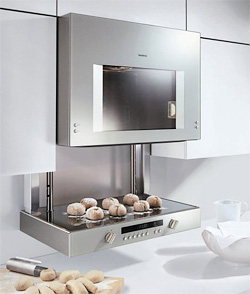
Drop brand names such as Viking, Sub-Zero and Bosch. Identify granite countertops and stainless-steel appliances. Mention appealing features such as those pullout shelves in the kitchen cabinets or the walk-in pantry.

Try to hit [buyers'] hot buttons. Give as many details or facts about a property as you can.
That could include updates such as a new roof, separate his-and-hers closets, a finished basement or a master bedroom downstairs.
A saltwater pool, or a pool that has been recently resurfaced or updated, is also worth distinguishing from its traditional counterparts.

Wednesday, July 11, 2012

6 things your home listing should include

Say the right thing: 6 things your home listing should include (© Stockbroker/SuperStock)

Particular phrases and specific information can help your home sell more quickly — and for a better price.

A picture may be worth a thousand words, but the right turn of phrase in a home listing can make a big difference in how fast a home sells and how much a seller can get for it.

The right description can get your home a second look; the wrong one can sour buyers on the property in a matter of seconds. So choose those words wisely. It's all about capturing an audience. Try to create something that will just get [buyers or agents] to take a look at it.
Here are some tips:

1. Highlight unseen amenities. The data fields on a listing can tell you how many bedrooms and bathrooms a house has, but they won't tell you the whole story. Neither will the photos, agents say.

Important amenities such as an oversized garage or great views should be played up in the write-up. If you can see a picturesque vista from almost every room in the house, say so. Likewise, if a house is private because it backs up to an open space rather than a neighbor's property, that belongs in the description too. 

Tuesday, July 10, 2012

Homebuying secrets to steal from flippers - cont.

And in order to move quickly and land that prime piece of property, you must be preapproved for a loan and know what terms you can offer a seller.


With fewer homes on the market, buyers will often find themselves bidding against several other bidders. Without cash or the ability to offer a much higher price — for fear that a property won't appraise — buyers have to focus on terms that make life easier for the seller.
  • Can you get a home inspection and other due diligence done right away?
  • Can you close in two weeks?
  • Can you put a larger amount of earnest money down to show your commitment to closing the deal?
On one property the pair flipped recently, they accepted a bid that was $15,000 less than the highest offer because the buyer's agent convinced them they could close quickly.

You want to make sure you can offer the right terms and conditions and are ready to go. And you need to have an experienced agent who can communicate that to sellers. Don't just get your relative or your friend from high school [to represent you]; you want someone who really knows the industry. So many people sign a buyers agreement with the first agent they meet, rather than shopping around. Experienced agents who are working full time can get out to — and get you into — properties before other bidders.

Lastly, just as you don't want to settle when you're dating, you don't want to settle when buying a home. Here are a few of the things that could make a home less of a sound investment:
  • A "uniquely weird" layout or design.
  • A very busy street.
  • Safety issues or structural problems.
If there's anything safety-related [that's wrong with the house], you should walk away. Those safety issues will turn up on a home inspection, so never pass this step up when buying a home.

What do you lose by passing on a home inspection?
We've all heard that having a home inspection is a critical step for buyers before they close a deal. But occasionally a reader will ask what these inspections can turn up, and what you could miss by bypassing one to close quickly.

The three things you risk are your money, your safety and knowledge of that home's features — including its inefficiencies. It's one of the few services that will save you more money than you spend.

Monday, July 9, 2012

Homebuying secrets to steal from flippers

July Buying Advice (© Spencer Platt/Getty Images)The words "real-estate investor" are enough to make many buyers grit their teeth. With inventory tight, these all-cash rivals are hard to beat when it comes to nabbing properties.
If you can't beat them, you might as well learn from them. How do they pinpoint the best deals? And how can you make your offer stand out from others?

In this month's Buying Advice, we'll also look at the kinds of problems a home inspection can turn up, and how having one done can save you money — both at closing and on your utility bills. And we'll check in with the latest housing statistics, which point to a slow but continued recovery.

A little flippin' advice
Start by studying the neighborhood. As soon as a traditional listing or foreclosed home becomes available,  scrutinize the surrounding three blocks and look at the following factors:
  • How many homes are on the market and how long have they been on the market?
  • What condition are these properties in?
  • What's in escrow? What have houses nearby sold for in the past 90 days?
Buyers must take the time to learn the marketplace and look at a lot of homes, so they will know real value when they see it. Some see more than 100 homes for every one they buy.
But most people want to get serious the first day they go out and look at homes.
They say you need to treat homebuying more like dating: See what's out there and figure out what features you like so you can jump when you see the perfect fit.

Sunday, July 8, 2012

6 Must-Dos for Homebuyers- cont.

Get preapproved for a mortgageGet preapproved for a mortgage

For serious home shoppers, the number 1 thing is they better have everything in order, according to the National Association of Realtors. That means that, before the real home shopping begins, you want to get financing in place.
And the preapproval process is "much more extensive" than it was a few years ago.
That documentation around income and assets is very essential, more so than in the last five years.
Improve your chances by: getting financing in place before you walk through the first house. Otherwise, How do you know how much you can afford?

Saturday, July 7, 2012

6 Must-Dos for Homebuyers- cont.

Build a healthy savings accountBuild a healthy savings account

This is over and above your money for the down payment and closing. Your lender wants to see that you're not living paycheck to paycheck. If you have three to five months' worth of mortgage payments set aside, that makes you a much better loan candidate. And some lenders and backers, like the FHA, will give you a little more latitude on other factors if they see that you save a cash cushion.
That money will also help you with maintenance and repair issues that come up when you own a home. While repairs are sporadic, items such as a new roof, water heater or other big-ticket items can hit suddenly and hard.
Improve your chances by: setting aside money every month. A good rule of thumb: on average you'll spend 2.5 percent to 3 percent of your home's value annually on upkeep, repairs and maintenance, says Joseph Gyourko, chairman of the real estate department at the Wharton School of the University of Pennsylvania. If you're buying a $250,000 home, aim to bank $520 to $625 per month.